


Not all chefs are great photographers: help comes from the images created by Ai
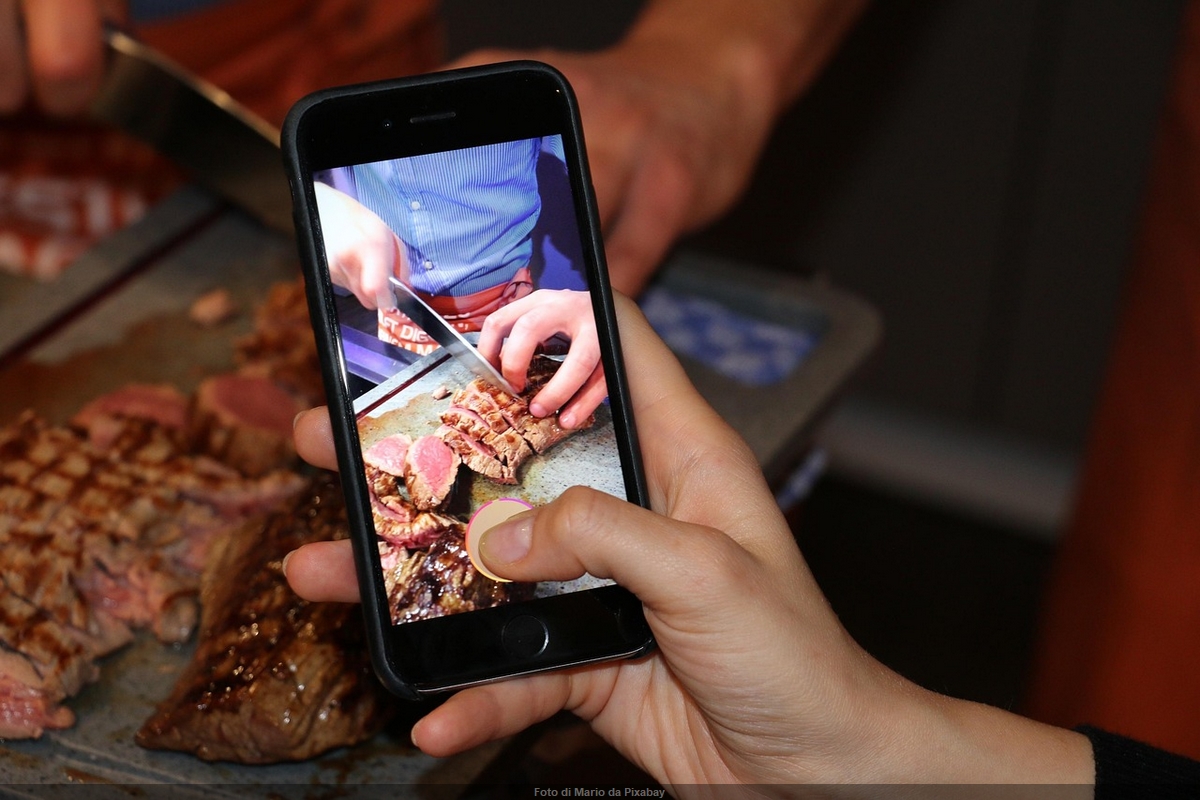
Those who write about cooking online know well the frustration of the novice food blogger. You have a recipe that you know is good, you tested it, you wrote it carefully, you laid it out. And then it's up to the photo. You have to cook the dish again just to photograph it, assemble the scenography, manage the light, choose the right crockery, and finally get an image that, if it goes well, it is dignified but rarely extraordinary. Because not all great cooks are also great photographers. All this for a post that will remain online for a few months before being replaced by the next one.
Since there have been reliable image generation tools, this equation has changed profoundly. It's worth understanding how, if and where the novelty really works, and where traditional methods remain irreplaceable.
The real problem of food photography for blogs
Food photography done well takes time, equipment, skills, and a kitchen that becomes a small photography studio for a few hours. For a professional food blogger, this is the work itself and therefore it makes sense to do it and also specialize in the art of photography. I did it and I would never give up my personal touch in the photographs on my blog.
But for those who write about cooking as a passion, integration of a main job, or secondary activity, the time investment necessary for each single photo becomes a brake on publication. The concrete result is that many food blogs that are excellent in terms of recipes publish little because the bottleneck is not writing, but photography. Good recipes stay in notebooks or note files, waiting for an afternoon when there is time for the photo session. That afternoon often never arrives.
What changes with image generation
Image generation allows you to produce virtual photographs of dishes starting from a textual description. “Pasta alla Norma dish seen from above, on rustic wooden table, natural light entering from the left, fresh ingredients on the background”: in a few seconds an image appears that, two or three years ago, it would have been indistinguishable from a real photograph to 90% of the public.
For the amateur or semi-professional food blogger, this means being able to publish a recipe with a quality accompanying image without having actually cooked and photographed the dish for the blog. It means being able to recover recipes written down months ago, illustrate them, and publish them. It means being able to maintain a publishing frequency that would have been impossible with the traditional workflow.
Tools like Adobe Firefly are a kind of create Ai images which you can access directly from your browser. The significant advantage for those who manage a blog is that the images produced are designed for safe commercial use. For a food blog that monetizes with advertising or collaborations, this means being able to use images on sponsored content without having to check licenses on a case-by-case basis.
The limits that are honest to admit
It is worth clearly saying where image generation works and where it doesn't. This works great for concept recipes, for dishes that the reader knows and of which he expects a typical illustration, for publications where the image serves to evoke and not to document. It works less well when the recipe has specific characteristics that the reader will want to see faithfully reproduced: a particular decoration, an unusual visual technique, a presentation that is the blogger's signature.
Then there is a question of editorial transparency. A serious food blog should be clear with its audience about what is real photography and what is generated image. It is not a legal obligation but it is a choice of respect towards the reader, and in the long run it helps build trust.

The cultural value that is not generated
There is an aspect of cooking that no tool can replace, and it is the relationship between the dish and the culture it comes from. Sicilian cuisine, to give an example, it's not just a series of recipes: it is a heritage made of seasonality, of local products, of handed down techniques. The FAO has repeatedly underlined how Mediterranean food traditions, recognized as intangible heritage of humanity, derive their value precisely from the inseparable link between the product, territory, and culinary gesture. And'generated image can evoke a caponata, but it never replaces the story of how that caponata is prepared in a specific family, in a specific city, with tomatoes from a specific garden.
This is the point at which the food blog continues to have a value that technology does not undermine. The blogger's voice, his story, its relationship with the products, its familiar variants: all this is not generated by any tool, and it remains the reason why a reader chooses to follow one food blog rather than another.
An intelligent use, not a replacement
The most effective way to use image generation, for those who manage a food blog, it is not to completely replace photography but to integrate it. Real photos are taken for the most important dishes, for the more personal ones, for contents that want to show their signature. The generated images fill the space in between: archive recipes, the classic dishes of which you want to offer a variation, content that would not be published at all without a generated image.
In this way the blog maintains authenticity where it is needed, and gain productivity where you can. The time that used to go into photo sessions of standard dishes can be dedicated to recipes that truly deserve photography, to writing, all'interaction with readers, looking for new products.
Maturity comes with use
As with any new instrument, true value emerges with experience. The first prompts are often too general, the images all look similar to each other, personality is missing. After a few weeks of daily use, the blogger develops his own style even in the generation: certain cuts of light, certain types of crockery, certain atmospheres that become recognisable. At that point the images generated, while remaining so, they acquire a coherence that makes them part of the visual identity of the blog. Italian cuisine, and the Sicilian one in particular, it's one of the richest subjects to write about online. Have an extra tool to tell it, without having to give up publishing due to lack of time for photos, it is a novelty that is worth welcoming with curiosity, using it where it is needed and putting it aside where it is not needed.
* In collaborazione con Adobe

